
Today's top international story focuses on Western Europe, where climate agencies have reported the hottest June ever recorded. Several countries experienced unusually high temperatures, raising concerns about the increasing impact of climate change and extreme weather.
Experts say this intense heat has affected millions of people across the region. In many cities, temperatures stayed well above normal for several days, putting pressure on healthcare systems, power supplies, and public services.
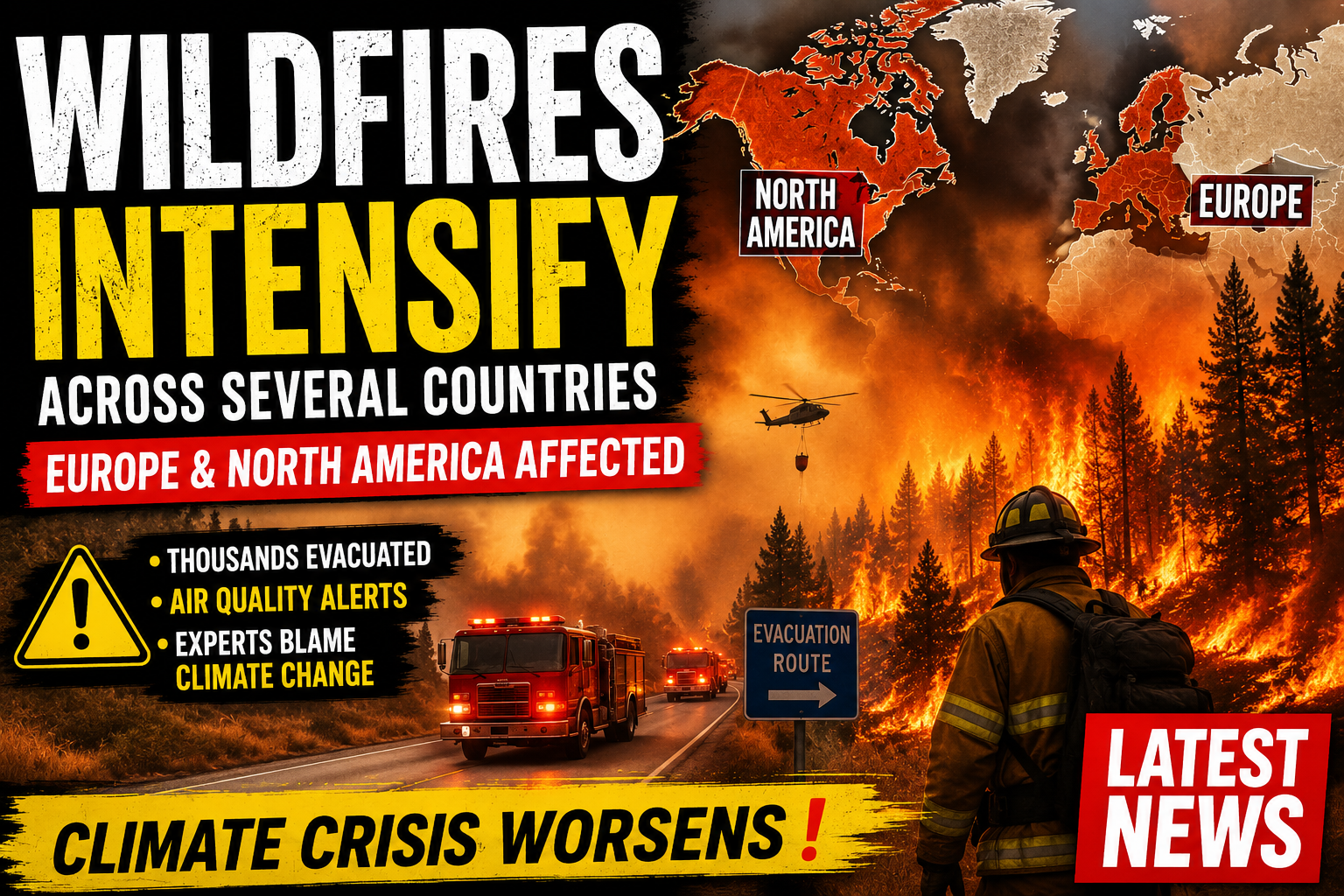
The prolonged heat has also increased the risk of drought and wildfires. Farmers in some areas are worried about crop damage, while low water levels in rivers could affect transportation and agriculture.
Health officials are advising people to stay hydrated, avoid direct sunlight during the hottest hours, and check on elderly family members and vulnerable individuals. Authorities have also opened cooling centers in some cities to help residents cope with the extreme temperatures.
Climate scientists explain that while heatwaves have always occurred naturally, global warming is making them more frequent, longer-lasting, and more intense. Rising greenhouse gas emissions are increasing average global temperatures, contributing to more extreme weather events around the world.
Governments across Europe continue to monitor the situation closely and are encouraging long-term measures to improve climate resilience, reduce emissions, and better prepare for future heatwaves.
As weather patterns continue to change, experts believe countries will need stronger climate adaptation plans to protect both people and the environment.

Comments (0)
No comments yet. Be the first to comment!